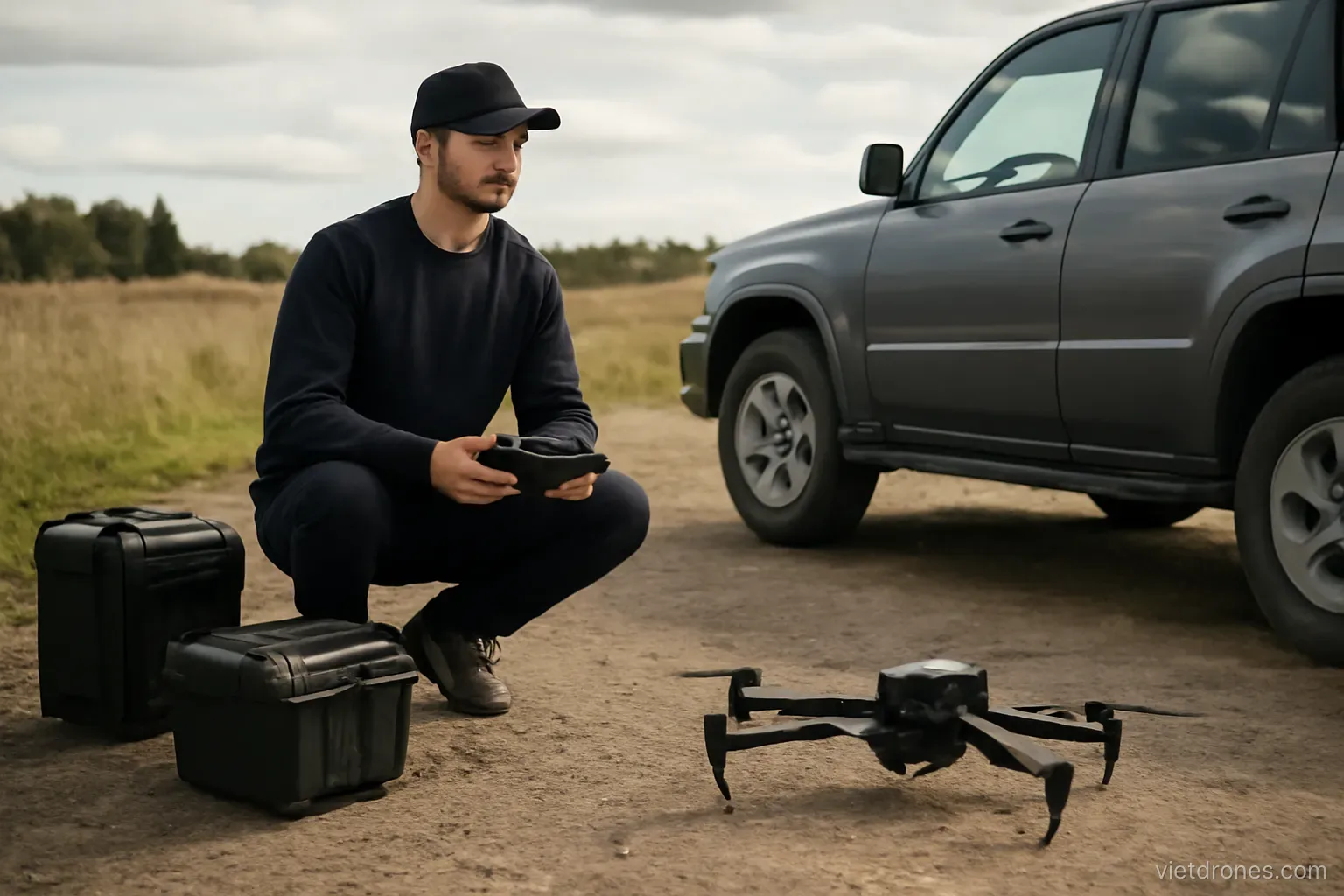
A commercial shoot that goes smoothly looks effortless from outside. That appearance is produced almost entirely by work done before anyone arrives on the day.
The site survey
Visit before the shoot day. Or study imagery thoroughly if a visit is impossible.
Confirm the airspace position. Before committing to a date.
Identify hazards. Power lines, masts, cranes, trees and traffic.
Find take-off and landing points. Primary and alternate.
Assess public exposure. Where people will be and how they move through the site.
Check access and parking. Including for equipment cases.
Establish who is in charge. Site manager, security or landowner, and how to reach them on the day.
Note sun position by hour. It determines the shooting order.
Note mobile coverage. A site with no signal changes how you coordinate with the client and whether you can check anything on the day.
Photograph everything. The survey record is what you plan from.
Briefing the client
Confirm the shot list in advance. Written, agreed and specific.
Explain what is not possible. Before the day rather than during it.
Agree who attends. A client on site can approve shots immediately, which saves revisions.
Set expectations on timing. Including how long each setup takes.
Explain the weather policy. And who makes the call.
Confirm access arrangements. Keys, escorts and contact numbers.
Confirm what the client provides. People, vehicles, machinery in operation.
Send a summary the day before. Time, place, contacts and plan.
Ask what the footage is for. A website header, a trade show loop and a planning submission each need different coverage, and clients rarely volunteer this.
Underpromise slightly. Delivering more than agreed is a far better position than the reverse.
Managing safety on site
Arrive early. Setup without time pressure is safer setup.
Walk the site again. Conditions change between survey and shoot.
Establish an operating area. Marked, and explained to anyone working nearby.
Brief the people present. What you are doing, where not to walk, and how long.
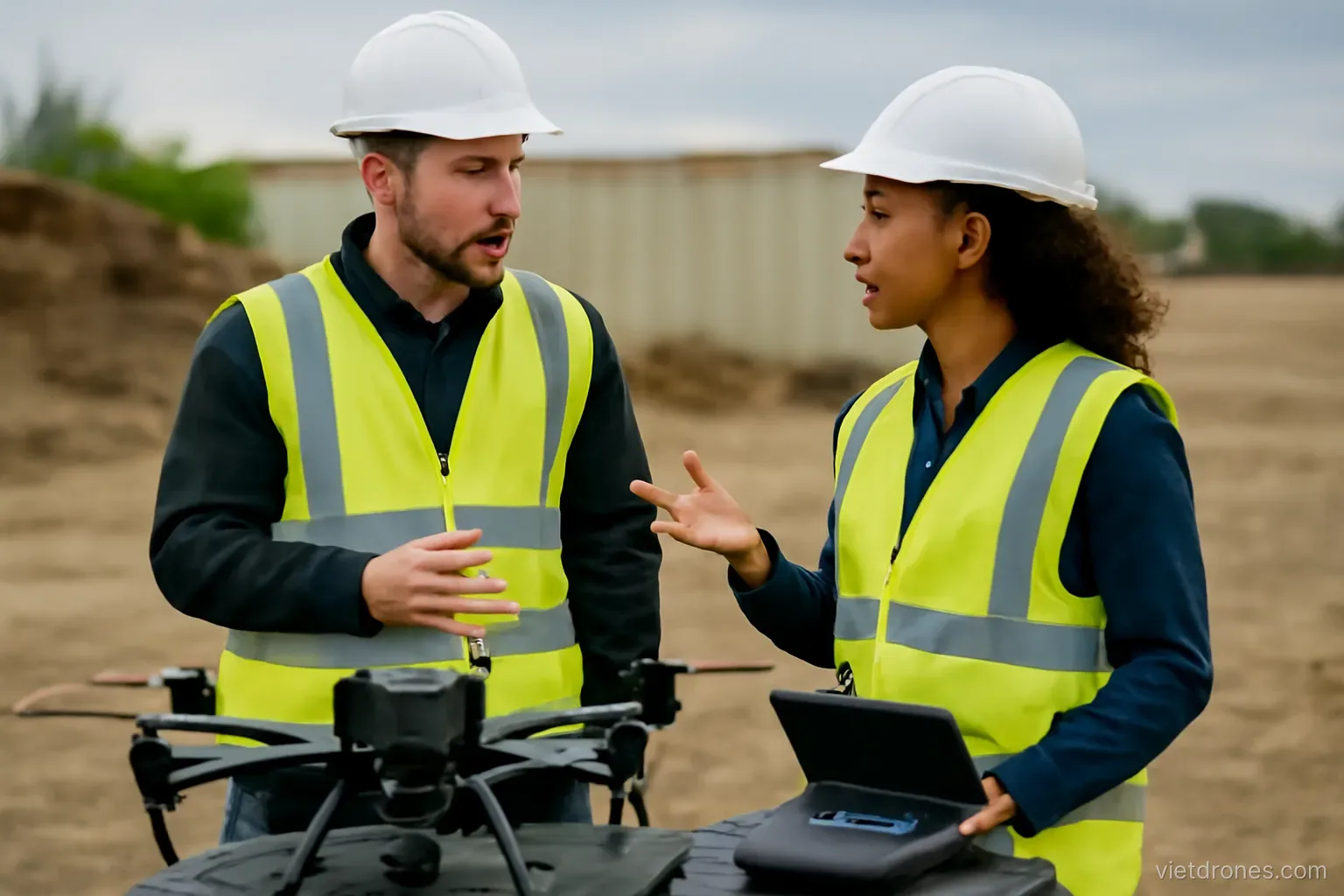
Wear identifiable clothing. High-visibility on active sites, which signals legitimacy as much as safety.
Have a spotter where possible. Watching the aircraft and the surroundings while you watch the shot.
Agree stop signals. How anyone can tell you to land immediately.
Watch for changing conditions. Wind, arriving vehicles, changing site activity.
Know the site emergency procedure. On an active industrial site, the assembly point and the person to notify matter as much as your own flight planning.
Be prepared to stop. The shot is never worth an incident on a client's site.
Executing the shoot
Get the essential shots first. Before conditions, battery or daylight become constraints.
Shoot each setup more than once. A second take costs a minute.
Shoot longer than needed. Handles at each end make editing possible.
Review after each battery. On the ground, checking framing, exposure and stability.
Show the client as you go. Adjusting on site is far cheaper than reshooting.
Capture extra coverage. Alternative angles and cutaways that the edit will need.
Keep notes. Which takes were good, which need repeating.
Track the shot list. Ticking off as you go, so nothing is missed.
Shoot the safe version first. Secure a usable take of each essential shot before attempting the more ambitious version of it.
Confirm completeness before packing. The last moment when anything can be fixed cheaply.
Wrapping up
Back up before leaving. Copy cards to a drive on site.
Verify the copy. Opening a few files rather than trusting the progress bar.
Do not format cards. Until there are two verified copies.
Leave the site as you found it. Including any markers and all packaging.
Thank whoever assisted. Site staff and security especially.
Confirm next steps with the client. What was captured and when to expect delivery.
Check equipment before departing. Count items against a list.
Note anything that went wrong. While it is fresh, for next time.
Log the flight properly. Location, duration, conditions and any incidents, recorded the same day while the detail is still accurate.
Send a short message that evening. Confirming the shoot went well, which costs a minute and reassures considerably.
Frequently asked questions
Why is a site survey worth the extra trip?
Because it confirms the airspace position, identifies hazards, establishes take-off points and sets the shooting order by sun position — all before a paid day is at stake.
Should the client be present at the shoot?
Where practical, yes. A client on site can approve shots immediately, and adjusting framing on location is far cheaper than a revision round or a reshoot.
How should safety be managed on a client's site?
Mark an operating area, brief everyone present on where not to walk and for how long, agree a stop signal, and use a spotter where possible.
What must happen before leaving the location?
Back up the cards to a drive on site, verify the copy by opening files, confirm the shot list is complete, and count equipment against a list.
More in Flight moves and technique and Care and repair.