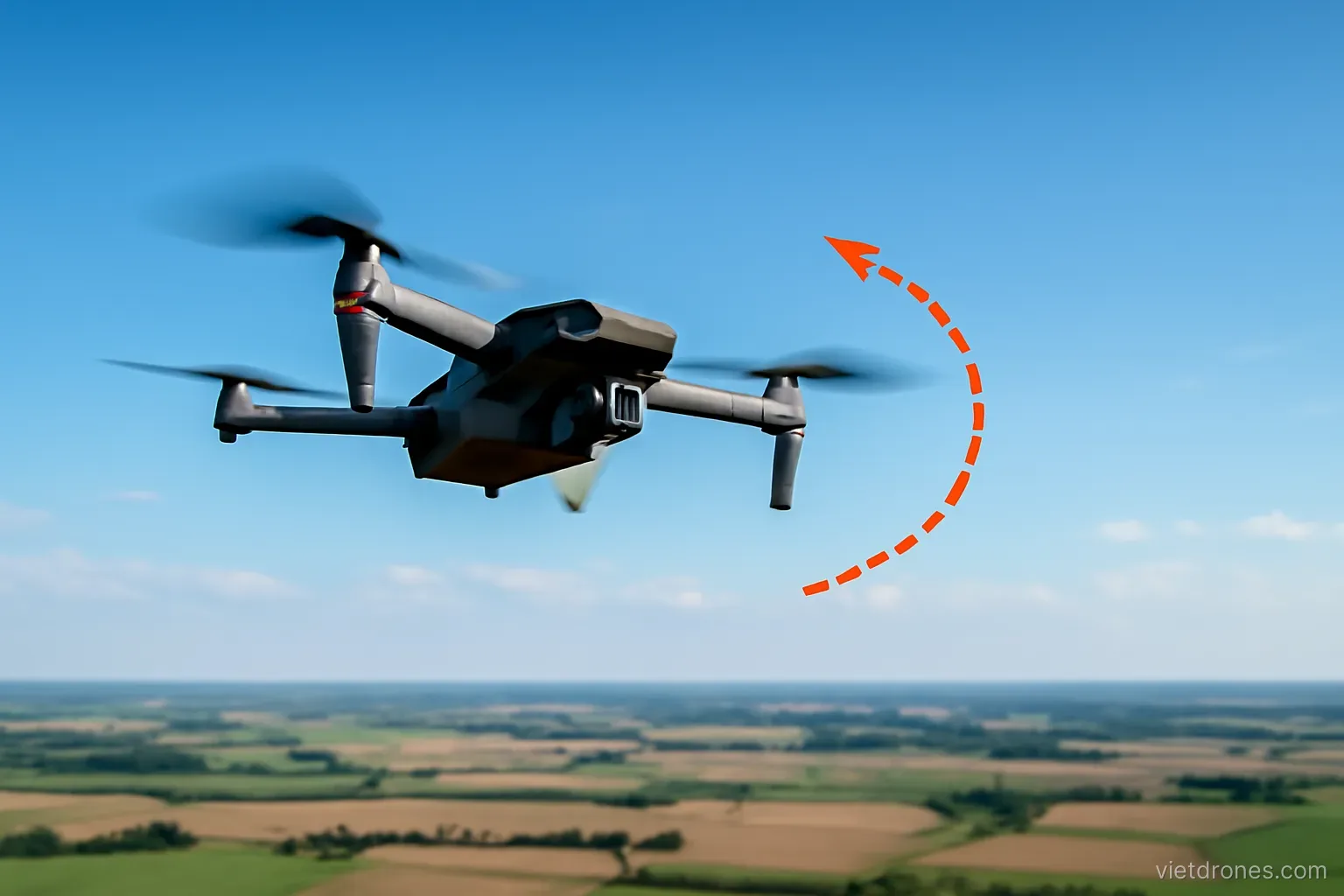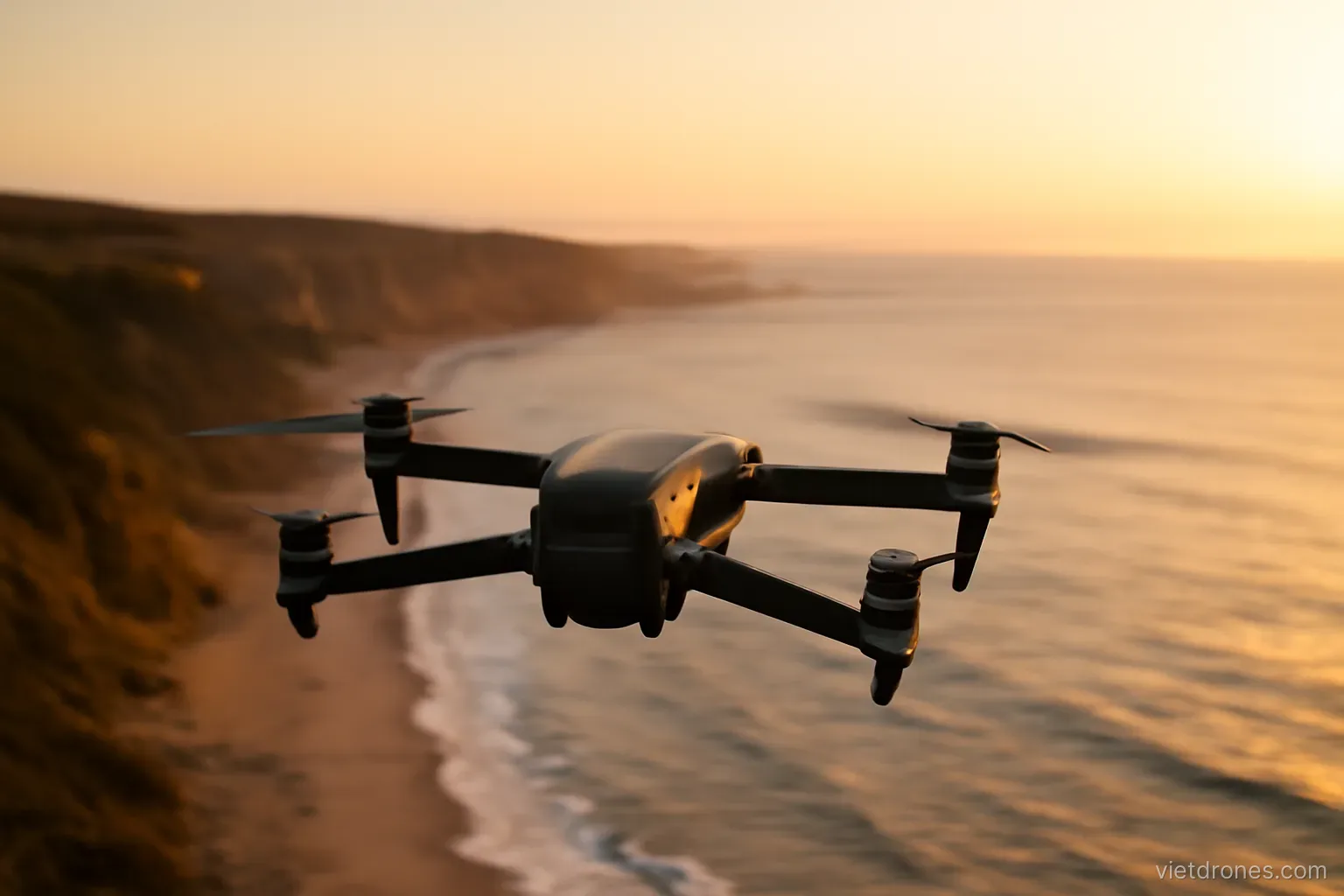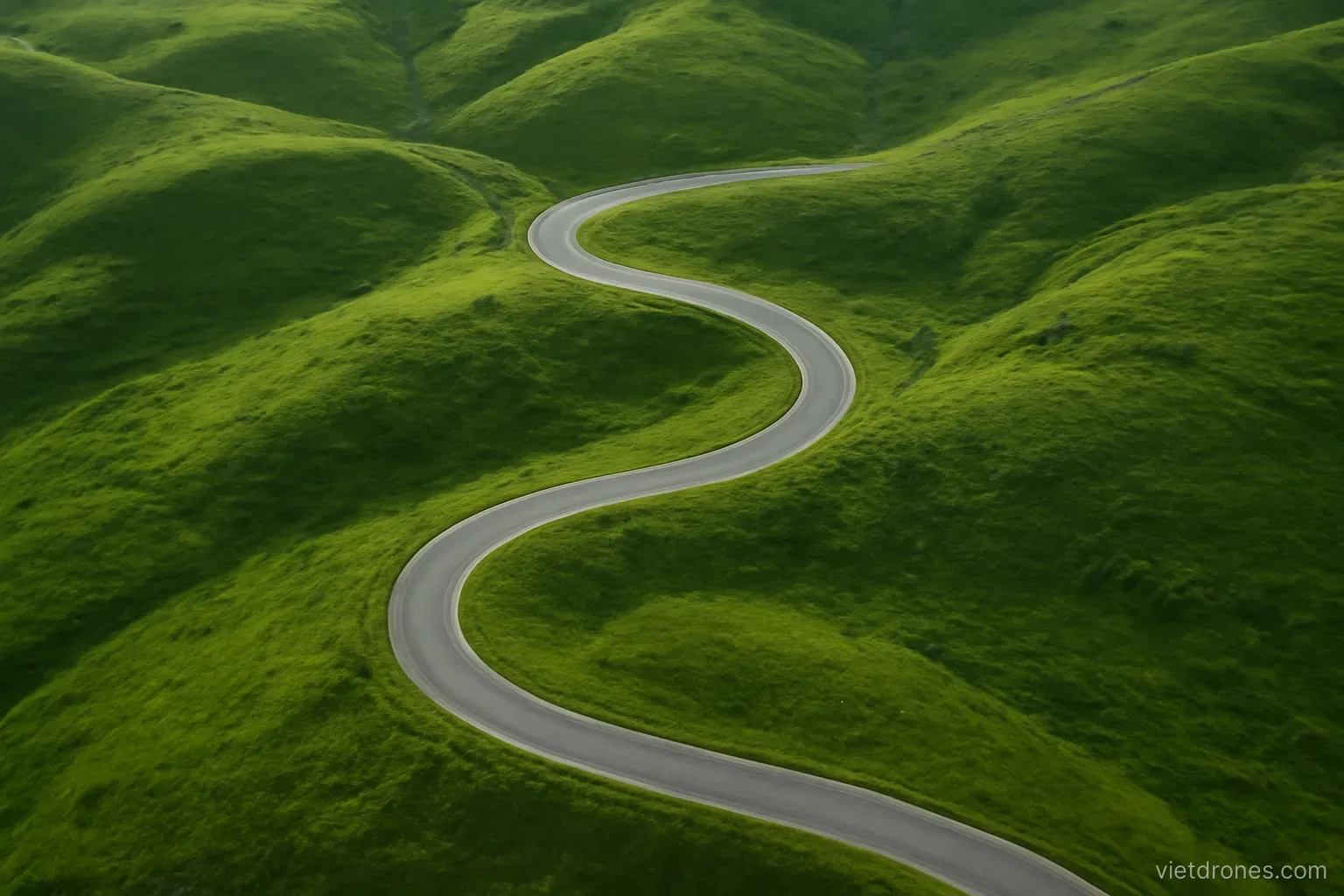
Height is not composition. A badly composed shot from two hundred metres is still badly composed, and the extra altitude usually makes it worse rather than better.
Choosing altitude
Altitude is a creative decision. Treat it the way a ground photographer treats focal length, not as something to maximise.
Low altitude keeps scale. Trees, people and buildings remain recognisable and the viewer understands the size of things.
Medium altitude shows relationships. How a village sits in a valley, how a road connects two places.
High altitude produces abstraction. Pattern replaces subject, which can be striking or can be empty.
Very high is usually worse. Detail disappears, haze increases, and the image flattens.
Change altitude within a scene. The same location gives three or four completely different shots at different heights.
Move closer rather than zooming. Digital zoom simply crops and loses quality.
Consider haze. Atmospheric haze increases with distance and washes out contrast quickly.
Ask what altitude serves the shot. If you cannot answer, you are probably just flying up.
Using lines and shapes
Look for leading lines. Roads, rivers, coastlines, field boundaries and paths all pull the eye through the frame.
Curves are stronger than straights. A winding road holds attention far longer than a straight one.
Lines should lead somewhere. A line pointing out of frame at nothing frustrates the viewer.
Use diagonals. Diagonal composition creates energy that horizontal and vertical arrangements lack.
Look for repetition. Rows of trees, moored boats, market stalls, terraced fields.
Break the pattern deliberately. One element that differs gives the eye a destination.
Use natural framing. Overhanging branches or an archway at the edge adds depth.
Watch the frame edges. Half a building or a clipped shadow at the border is distracting.
Symmetry is powerful from above. But it must be accurate, because near-symmetry looks like an error.
Camera angle and subject placement
Slight downward angle is the workhorse. Roughly thirty to forty-five degrees keeps depth while showing the layout.
Horizontal camera reads as human. Useful when you want the viewer to feel present rather than observing.
Vertical reads as abstract. Fully top-down removes depth and turns the scene into graphic design.
Avoid the awkward middle. Around sixty degrees often looks neither immersive nor graphic.
Place the horizon deliberately. High in the frame emphasises land; low emphasises sky.
Never centre the horizon by accident. Dead centre works only when the composition is deliberately symmetrical.
Keep the horizon level. A tilted horizon is the most obvious amateur signature there is.
Offset the subject. Rule-of-thirds placement usually beats dead centre except in symmetrical shots.
Leave room in the direction of movement. A moving subject needs space ahead of it in the frame.
Foreground and depth
Foreground creates depth. Without it, aerial images flatten into maps.
Fly close past something. An edge, a rooftop, a treetop passing near the lens gives immediate three-dimensionality.
Layer the scene. Something near, something mid-distance, something far.
Use shadows as layers. Long shadows in early or late light do this naturally.
Mist and haze can help. Receding layers of hills separated by mist are one of the most reliable aerial images there is.
Include a scale reference. A person, a boat, a car tells the viewer how large everything is.
Beware empty frames. Large areas of uniform water, sand or sky drain interest.
Watch for your own shadow. Low sun and low altitude regularly put the drone in shot.
Movement adds depth too. Parallax between near and far elements is available to video in a way stills cannot use.
Common compositional mistakes
Flying too high by default. The commonest error, and it removes both scale and detail.
Centring everything. Central placement makes a shot static unless it is symmetrical on purpose.
No clear subject. A beautiful landscape still needs something for the eye to settle on.
Tilted horizon. Easy to avoid and instantly noticeable.
Too much sky. Unless the sky itself is the subject, it usually wastes frame.
Cluttered frames. Aerial views include everything, so composition means excluding.
Ignoring light direction. The same scene changes completely depending on where the sun sits.
Shooting at midday. Overhead sun removes shadows and with them all sense of form.
Not moving the drone between takes. Several angles of one subject cost nothing and give the edit choices.
Frequently asked questions
What is the most common aerial composition mistake?
Flying too high by default. Altitude removes scale and detail, and increases haze — it is a creative choice rather than something to maximise.
Which camera angle works most reliably?
A slight downward angle of roughly thirty to forty-five degrees, which keeps a sense of depth while still showing how the scene is laid out.
How do I stop aerial shots looking flat?
Add foreground — fly close past an edge, rooftop or treetop, layer near, middle and far elements, and shoot when shadows are long.
Why is midday bad for aerial filming?
Overhead sun removes shadows, and shadows are what give aerial views their sense of form, texture and depth.
More in Camera settings and Care and repair.