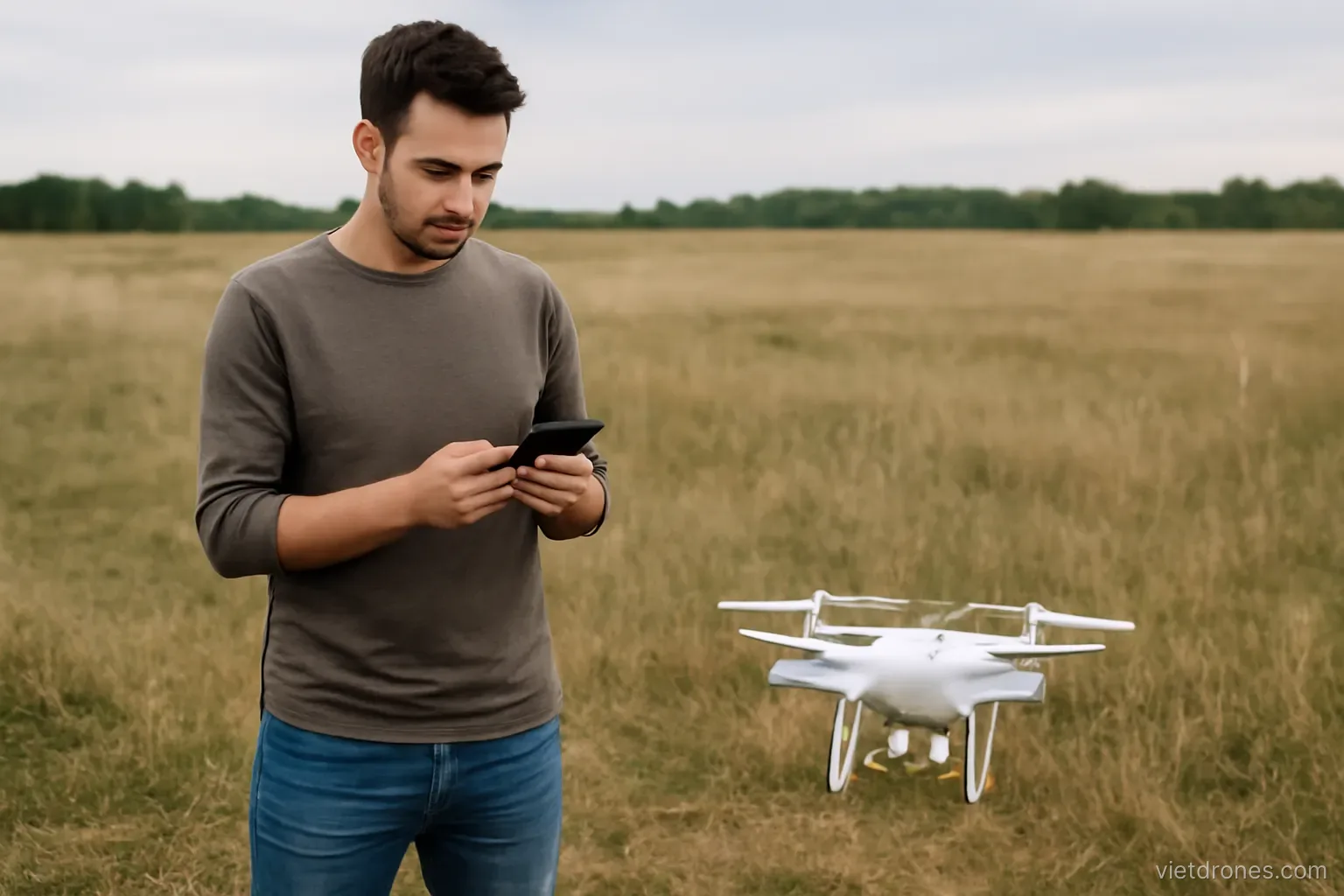
Accidents are usually the last event in a chain that started well before take-off. A preflight routine is simply a set of places to break that chain cheaply.
Assessing the site
Walk the area before flying. Screen views miss things that are obvious from the ground.
Find the power lines. Locate the poles and trace the wires, because the wires themselves are effectively invisible in the air.
Identify tall obstacles. Masts, cranes, trees and buildings, and note their approximate heights.
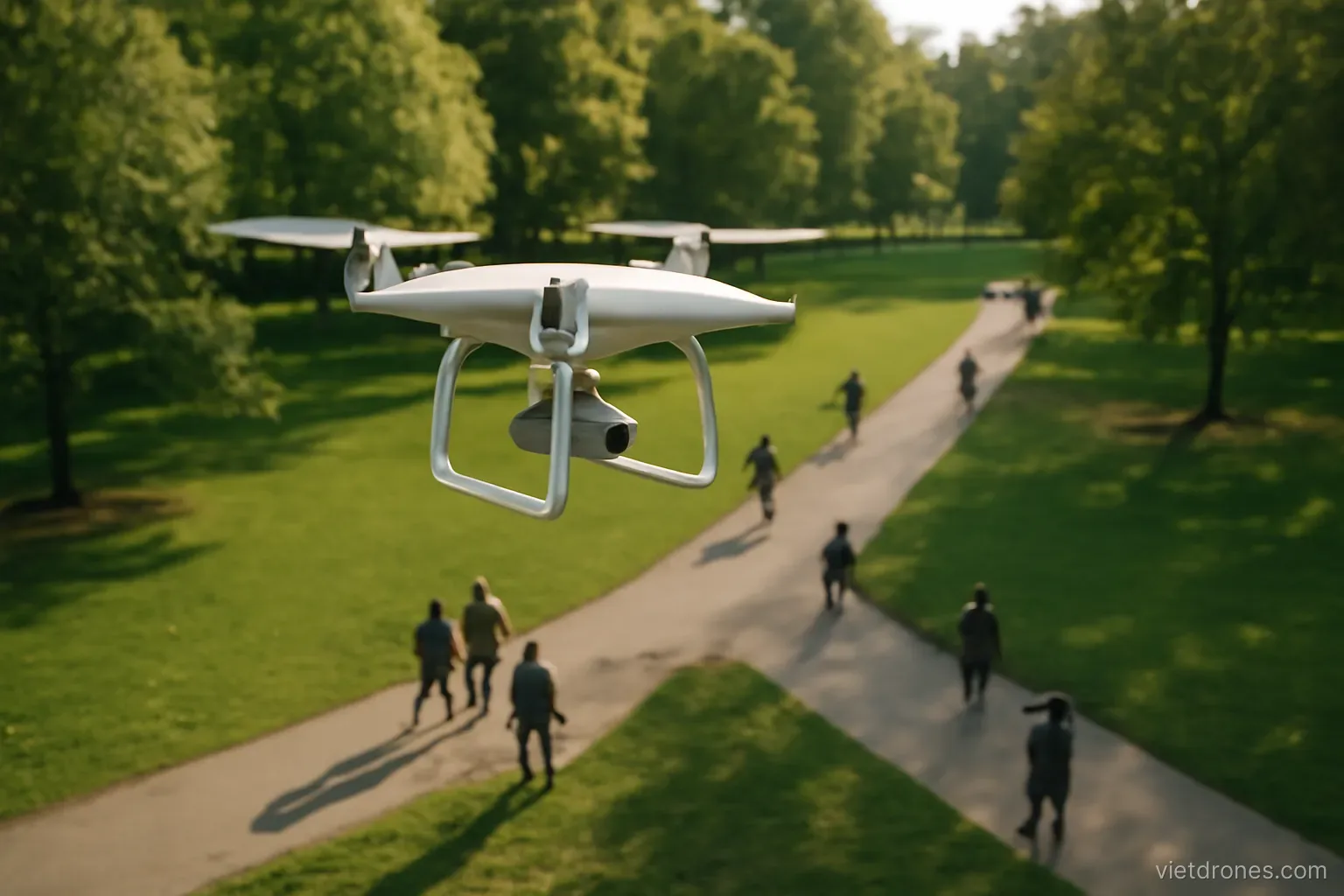
Look for people. Where they are, where they are likely to move, and whether anyone will pass through.
Check for animals. Livestock panic, and dogs frequently chase.
Choose a take-off point deliberately. Flat, firm, clear of debris and away from the path of passers-by.
Identify a landing alternative. Somewhere else you could put the aircraft down in a hurry.
Note the terrain. Rising ground reduces your clearance without any change in indicated altitude.
Check phone signal and reception. Not for the aircraft, but so you can call for help or look something up if the situation changes.
Consider who owns the land. Permission is often a courtesy that avoids the entire problem.
Weather and conditions
Check wind at altitude, not at ground level. It is frequently much stronger a hundred metres up.
Know your aircraft's wind limit. And treat it as a limit rather than a target.
Watch for gusts. Average wind speed matters less than the gusts within it.
Avoid rain entirely. Most consumer drones are not weather-sealed and light rain is sufficient to cause damage.
Beware fog and low cloud. Losing sight of the aircraft happens faster than expected.
Consider temperature. Cold reduces battery capacity substantially and heat affects performance too.
Check the light. Both for the footage and for maintaining visual contact.
Watch terrain effects. Air spilling over ridges and around buildings is turbulent and unpredictable.
Check the forecast trend, not the snapshot. Conditions improving over the next hour justify waiting; conditions deteriorating mean flying now or not at all.
Be willing to cancel. The decision not to fly is a legitimate outcome of the assessment.
Aircraft and equipment
Inspect the propellers. Every flight, without exception.
Check the battery is charged and seated. And that you have the spares you expect to have.
Confirm the memory card. Present and with space, since discovering otherwise mid-flight wastes a battery.
Remove the gimbal guard. The most common cause of a start-up error.
Check firmware status. Not mid-update, and matching between aircraft and controller.
Verify return-to-home altitude. Set above every obstacle in the area.
Verify the home point is recorded. Before flying away from it.
Check satellite count. Waiting for a solid fix before launching.
Do a low hover. Ten seconds at two metres reveals most problems while they are still cheap.
Hazards people overlook
Thin wires of every kind. Power, telephone, guy wires, kite strings and washing lines.
Birds. Territorial species will attack a drone, particularly during nesting season.
Other aircraft. Agricultural aircraft, helicopters and paragliders operate low.
Your own launch site. Loose grass, sand and gravel drawn into motors on take-off.
Reflective surfaces. Water, glass and snow confuse downward sensors.
Magnetic interference. Reinforced concrete, vehicles and buried metal disturb the compass at take-off.
Sun position. Losing the aircraft against a bright sky is easy and disorienting.
Battery temperature. Cold batteries fail abruptly rather than gradually.
Your own state. Tired, rushed or distracted is a hazard as real as the weather.
In-flight discipline
Keep the aircraft in sight. The habit that prevents most serious incidents.
Look up regularly. Not only at the screen.
Know your position relative to home. Direction and rough distance at all times.
Monitor battery continuously. And plan the return before it becomes urgent.
Fly conservatively near obstacles. Sensors are an aid, not a guarantee.
Have an abort plan. Decide in advance what you do if something appears.
Do not multitask. Conversations and phone calls both cost attention that flying needs.
Land on any doubt. An unexplained warning or sound is a reason to come down.
Fly the return earlier than feels necessary. The distance home always takes longer than the outbound leg felt, particularly against wind.
Debrief briefly. Note anything unusual while it is still fresh, because patterns emerge from small notes.
Frequently asked questions
What is the most overlooked hazard at a flying site?
Thin wires — power, telephone, guy wires and kite strings. They are effectively invisible in the air and obstacle sensors do not detect them.
Why check wind at altitude rather than ground level?
Because wind is frequently much stronger a hundred metres up than at the surface, and gusts matter more than the average speed.
What does a low hover before flying achieve?
Ten seconds at two metres reveals drift, vibration, unusual sounds and gimbal problems while the aircraft is still close and cheap to recover.
When should a flight be abandoned mid-air?
On any unexplained warning, sound or handling change. Landing costs one shot; continuing with an unexplained fault can cost the aircraft.
More in Camera settings and Choosing a drone.