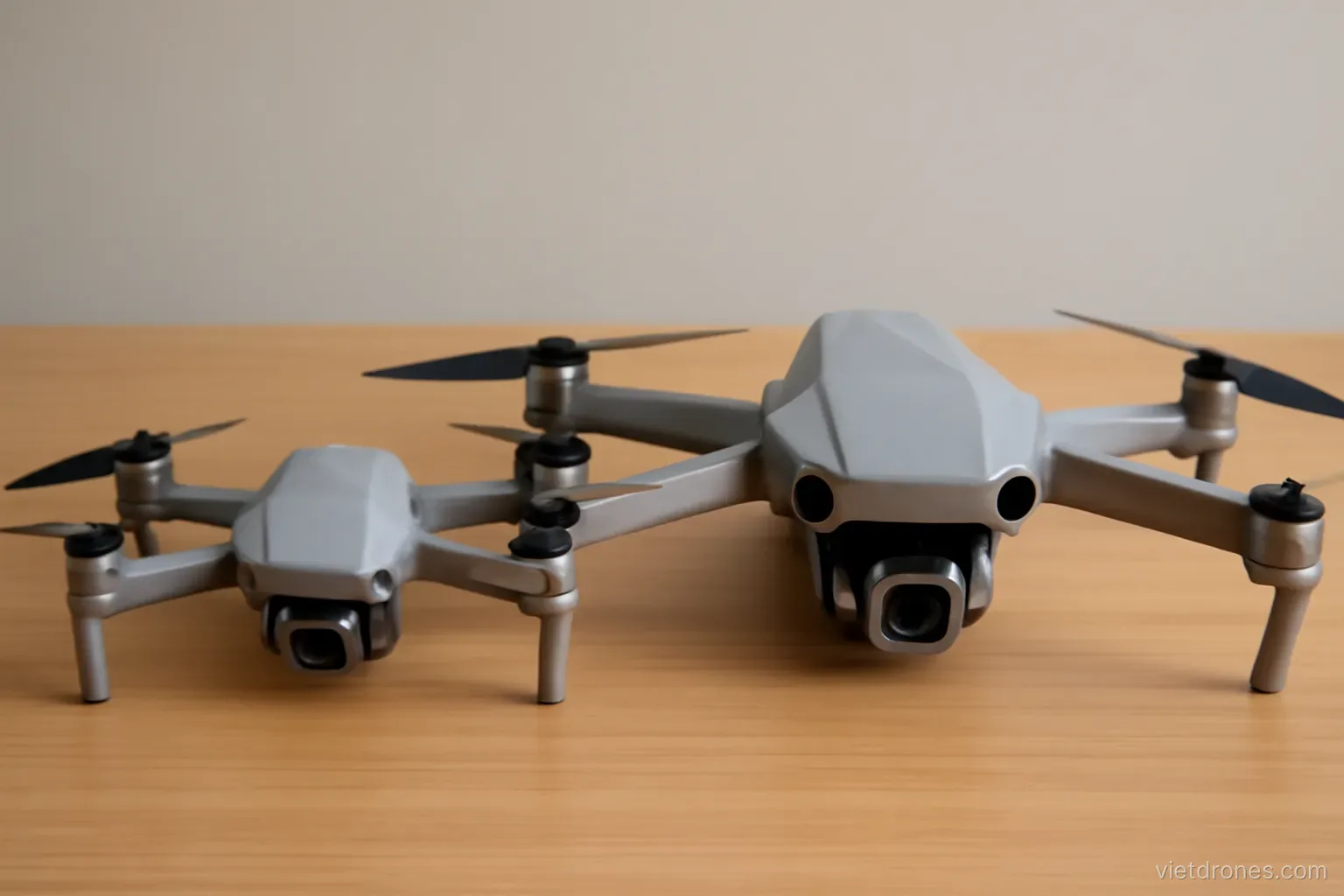
Weight sounds like a dull specification until you notice that it decides how much paperwork you face, how the drone behaves in wind, and whether it comes with you at all.
Why weight is the pivotal choice
Regulation follows weight. Most national frameworks set thresholds by mass, and crossing one changes your obligations.
Wind handling follows weight. Lighter aircraft are pushed around more and fight harder to hold position.
Battery life follows weight. Heavier drones carry bigger batteries, and the trade is rarely simple.
Camera size follows weight. Larger sensors and better gimbals need mass to carry them.
Portability follows weight. Every gram matters when the drone shares a bag with a laptop.
Risk follows weight. A heavier aircraft causes more damage in a fall, which is why regulators care.
Noise follows weight. Bigger props and motors are audible from much further away.
Price follows weight. Loosely, but the pattern holds across most ranges.
Choose the class first. Then compare models inside it. Comparing across classes wastes time.
The ultralight class
Under a quarter kilogram. A widely used regulatory threshold in many countries.
Lighter obligations in many places. Check what applies where you fly, because the details differ.
Genuinely portable. Fits in a jacket pocket or the corner of a daypack.
Quiet. Draws far less attention, which matters in public places.
Less intimidating. People react differently to a small aircraft.
Struggles in wind. The main practical limitation, and it appears sooner than expected.
Smaller sensor. Noticeably weaker in dim light, though daylight results can be excellent.
Shorter flights in practice. Small batteries and wind compensation drain quickly.
Cheaper to lose. The financial consequence of a crash is far smaller, which changes how willing you are to attempt an interesting shot.
Fewer spare parts needed. Small props and light frames survive minor knocks that would damage a larger aircraft.
Best for. Travel, hiking, casual filming, and anyone whose main obstacle is carrying the thing.
The mid-weight class
Roughly a quarter to nine hundred grams. The mainstream of consumer drones.
More obligations. Registration and identification requirements typically start here.
Much better in wind. The difference is immediately obvious in the air.
Larger sensors. Better dynamic range and much better low-light behaviour.
Longer real flight times. Bigger batteries and more stable flight.
Still portable. Folding designs fit a small bag, though not a pocket.
Louder. You will be noticed.
Better obstacle sensing. There is room for more sensors and better processing.
Best for. Serious hobbyists, anyone filming regularly, and most paid work at entry level.
Heavier and professional classes
Above roughly nine hundred grams. Fewer models and far higher prices.
Substantially more regulation. Often training, certification or authorisation requirements.
Interchangeable or large-sensor cameras. The reason people buy them.
Excellent wind stability. Usable in conditions that ground smaller aircraft.
Redundant systems. Duplicated components for reliability on commercial work.
Heavy to transport. Cases, not backpacks.
Expensive to crash. Both the aircraft and the liability.
Slower to set up. Not a spontaneous choice.
Longer endurance. Larger battery packs mean flights that stay useful even after climbing to altitude and repositioning several times during a shoot.
Best for. Commercial production, surveying, and specialised work with a budget behind it.
Choosing between classes
If it must travel, go light. The best drone remains the one you have with you.
If you fly coastal or mountain, go heavier. Wind will decide your success rate.
If you film at dawn and dusk, go heavier. Sensor size is not something skill compensates for.
If you fly around people, consider lighter. Lower risk and lower friction.
If rules concern you, read before buying. Requirements differ sharply between classes.
If you plan paid work, go mid-weight at least. Clients notice image quality.
If unsure, start mid-weight. It is the best compromise for most people.
Owning two is common. A light travel drone and a capable main aircraft cover almost everything.
Think about the next three years. A class that suits your first six months may frustrate you once your skills and ambitions grow beyond it.
Do not chase the lightest for its own sake. Saving grams is pointless if the footage disappoints you.
Frequently asked questions
Why does drone weight determine so much?
Because regulation, wind handling, battery life, camera size, noise and portability all scale with mass, so the class you choose constrains everything else.
What is the main limitation of ultralight drones?
Wind. They are pushed around easily and spend battery fighting to hold position, and that limit appears sooner than most buyers expect.
When is a heavier drone worth the extra obligations?
When you fly in windy coastal or mountain conditions, film at dawn and dusk, or need image quality good enough for paying clients.
Is it reasonable to own drones in two classes?
Yes, and it is common — a light travel drone that always comes along plus a capable main aircraft for planned shoots covers almost every situation.
More in Batteries and accessories and Flight moves and technique.