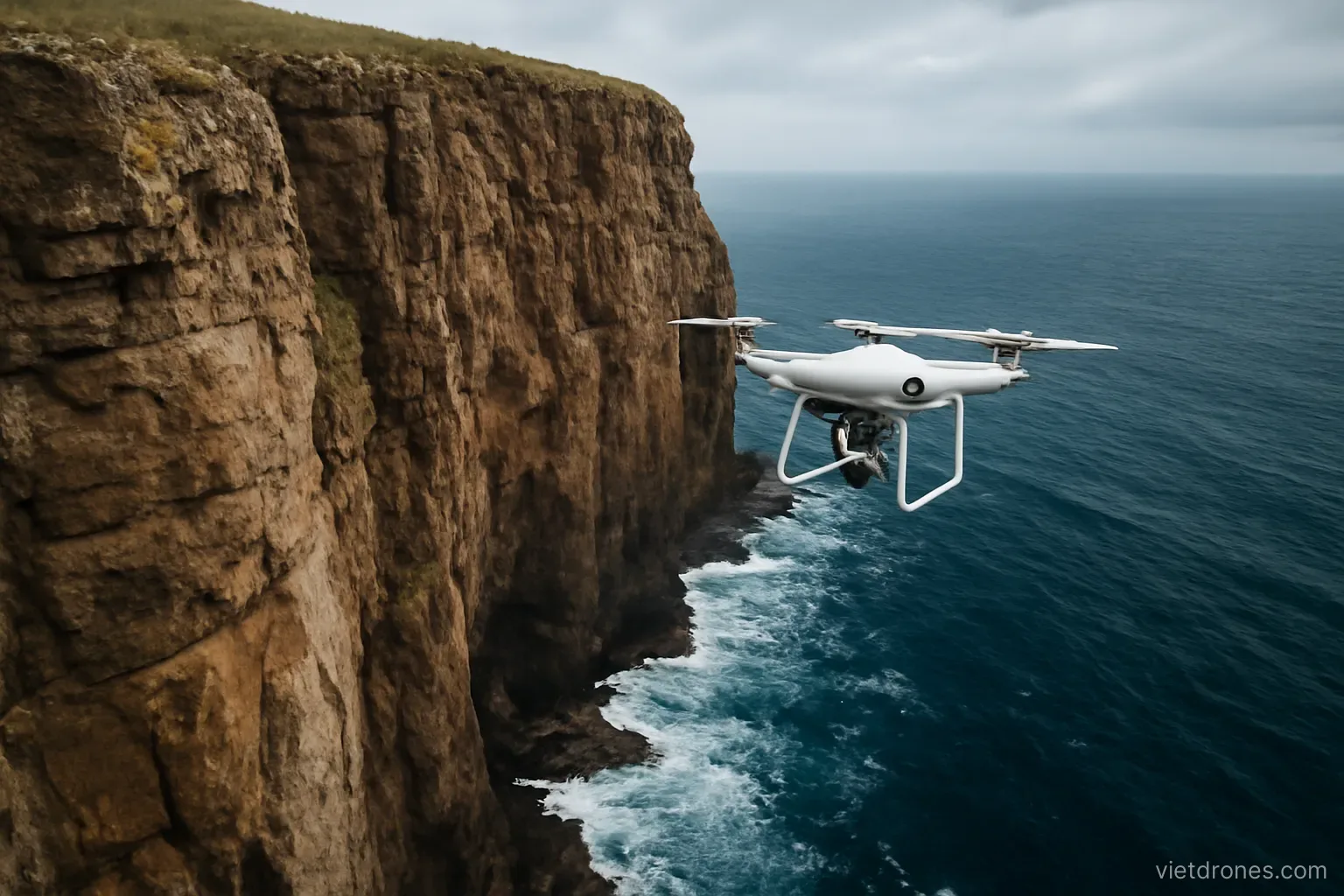
Once the basic moves are reliable, combinations open up. They are worth learning, but each one adds coordination load at exactly the moment when attention is most needed elsewhere.
The crane and pedestal
What it does. A vertical move with the camera tilting to hold the subject imitates a camera crane and feels controlled and deliberate.
Rise while tilting down. The subject stays in place while the surroundings expand around it.
Descend while tilting up. The reverse, useful for entering a scene.
Match the rates. The whole effect depends on the tilt speed matching the climb rate.
Practise the tilt wheel. Most pilots use it far too little and it is the harder half of this move.
Slow both inputs. Set a low gimbal speed before attempting it.
Pick a strong subject. A building, a tower, a rock formation with vertical presence.
Beware background changes. Rising often brings unwanted elements into frame, such as roads or buildings.
Where it fails. Over flat ground with no vertical subject, the move has nothing to describe.
The boomerang and spiral
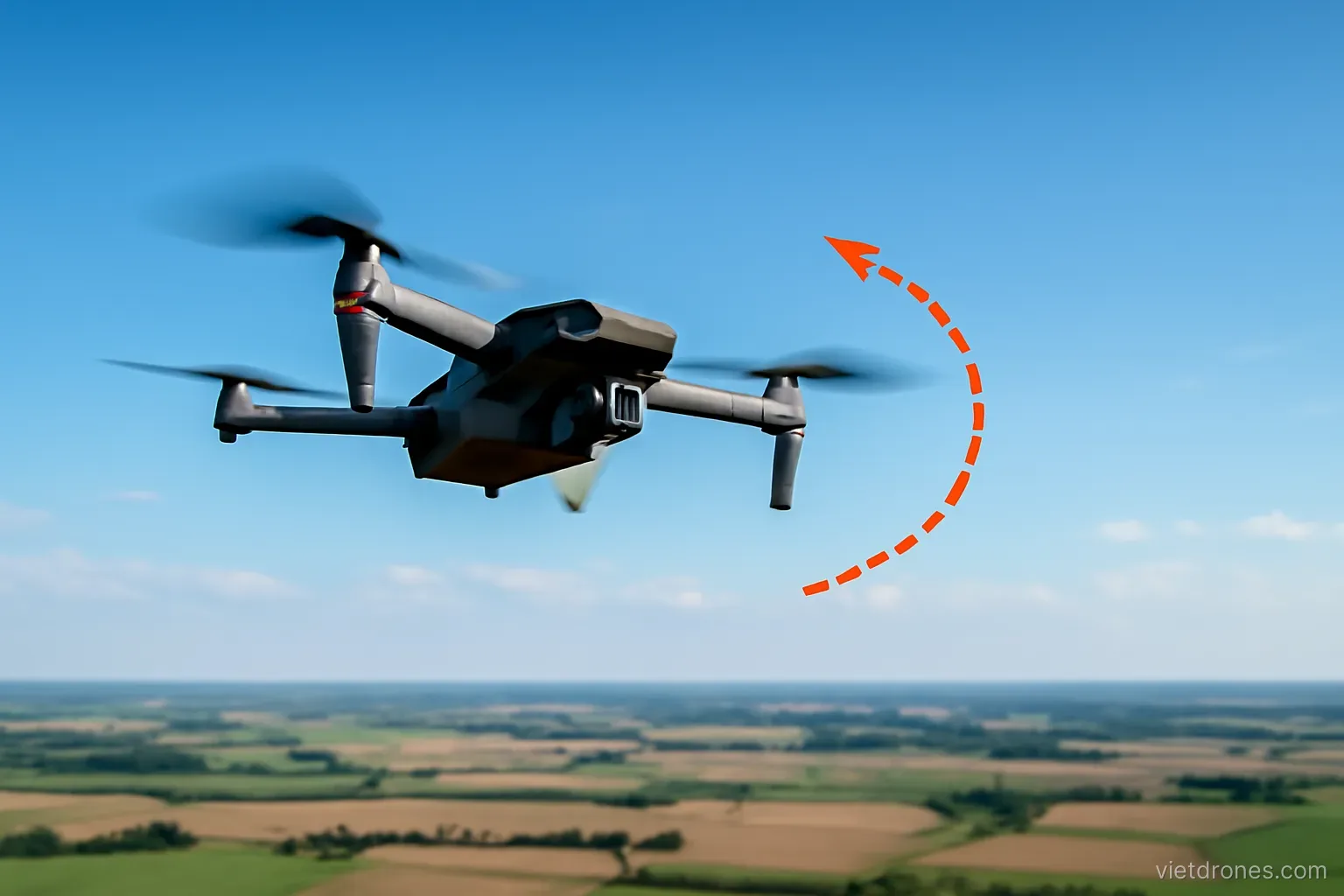
What it does. Combining an arc with a rise or descent produces a sweeping move that reveals a subject from several angles at once.
Three inputs at once. Lateral movement, yaw and altitude, all smooth, which is why it takes practice.
Start with automated versions. They teach the shape and the timing.
Then fly it manually. Automated modes cannot avoid obstacles or adjust mid-shot.
Keep the subject centred. Any drift is very obvious in a move this dynamic.
Ascending spirals open out. Good for endings and for revealing context.
Descending spirals close in. Good for arrivals and introductions.
Watch the whole airspace. Curved paths take the drone somewhere different from where it is pointing.
Where it fails. In cluttered environments, the flight path is hard to predict and the risk rises sharply.
The dolly zoom effect
What it does. The subject stays the same size while the background appears to rush in or away, producing a distinctly unsettling effect.
Requires optical zoom. Achieved by flying backwards while zooming in, or forwards while zooming out.
Digital versions exist. Some drones offer an automated approximation with a cropped result.
Needs a clear subject. Something with a defined outline against a deep background.
Distance matters. The effect is strongest when the background is far behind the subject.
Fly slowly and consistently. Speed changes destroy the illusion immediately.
Practise the coordination. Matching zoom rate to flight speed is genuinely difficult.
Use it sparingly. It is a strong effect and loses impact with repetition.
Where it fails. With a shallow background or an indistinct subject, it just looks like a zoom.
Low and fast moves
What it does. Flying low over water, fields or roads creates a strong sense of speed that higher shots cannot produce.
Proximity is what sells it. The apparent speed comes from nearby surfaces rushing past.
Water is the classic surface. But it is also the least forgiving of a mistake.
Beware sensor confusion over water. Downward sensors misread reflective and moving surfaces.
Keep a safety margin above the surface. Higher than instinct suggests, because reaction time is short.
Know the path in advance. There is no time to assess obstacles at speed and low altitude.
Have an escape plan. Decide before starting which way you climb out if something appears.
Do it fresh. Not on the last battery of a long session.
Where it fails. Anywhere with obstacles, people or unpredictable animals, where the risk simply is not justified.
Building a habit of restraint
Not every shot needs a complex move. Simple, well-flown moves make better sequences than a run of showy ones.
The move should serve the subject. If the shot only demonstrates flying skill, it will not survive the edit.
Mix simple and complex. Constant movement is exhausting to watch.
Get the safe version first. Fly the simple shot, then attempt the ambitious one.
Rehearse without recording. A dry run at a safe altitude reveals problems cheaply.
Abort without hesitation. A shot going wrong should be abandoned, not rescued.
Respect your current level. Attempting a move beyond your skill in a risky place is how drones are lost.
Build up gradually. Practise each combination in open space before using it near anything.
Judge by the edit. The only real test is whether the shot earns its place in the finished piece.
Frequently asked questions
What makes the crane shot difficult?
Matching the gimbal tilt rate to the climb rate. Most pilots underuse the tilt wheel, and it is the harder half of the move.
Should I learn spirals using automated modes?
As a starting point, yes — they teach the shape and timing. But learn the manual version too, since automated modes cannot avoid obstacles or adapt mid-shot.
Why is flying low over water risky?
Downward sensors misread reflective, moving surfaces, reaction time is very short at low altitude, and there is no margin if anything goes wrong.
When should an advanced move be avoided?
When it only demonstrates flying skill rather than serving the subject. Such shots rarely survive the edit, and they add risk for no benefit.
More in Camera settings and Care and repair.